MLB Umpires and Betting: How the Strike Zone Moves Totals
 Available in US
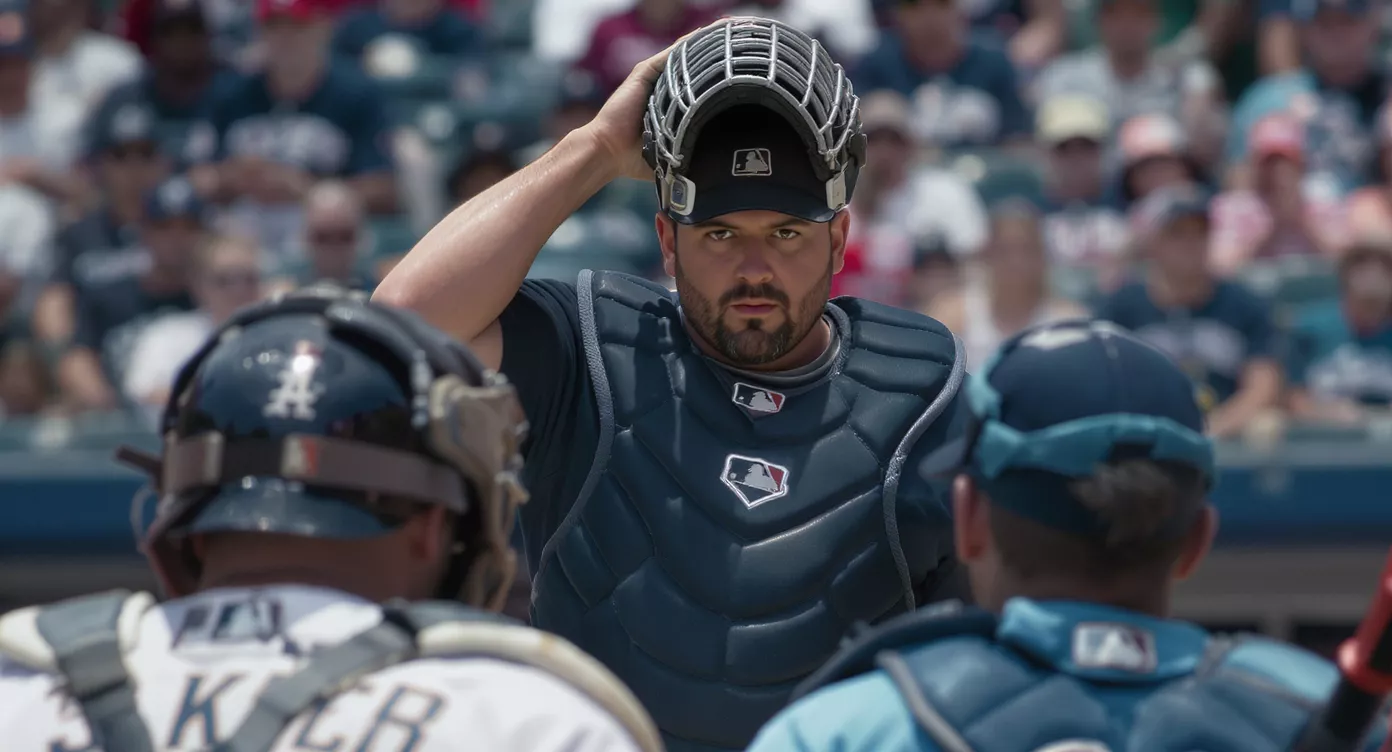
A home plate umpire whose zone runs slightly wider than the rule book defines is worth about half a run per game to the under. A pitcher-friendly umpire is the cleanest non-weather edge I track. The mlb umpire betting angle has narrowed in 2026 with the partial introduction of the Automated Balls and Strikes (ABS) challenge system, but it hasn’t disappeared, and the lazy market consensus that “robo-umps killed the umpire edge” is wrong. The challenge system reviews a small percentage of pitches per game. The remaining 95-plus percent are still called by a human, and that human’s zone tendencies still systematically shift run-scoring outcomes.
This piece walks through why umpires still matter in the pitch-clock and partial-ABS era, how to read umpire zone metrics, the specific markets where umpire information moves prices (strikeout props and totals), and where UK bettors can find the public umpire data that informs these decisions. The framework is straightforward once you accept that human judgement, deployed across 250 pitches per game, produces systematic differences regardless of any technology overlay.
Why Umpires Still Matter in 2026
The pitch clock arrived in 2023 and dramatically changed game pace. Average MLB game time in 2025 was 2 hours 38 minutes, the third consecutive season at or below 2:40 – the first such streak in 40 years, since 1983-85. That shorter game window has changed how umpires operate. Fewer pitches between visits, less time to lock in a consistent zone across innings, more leverage on the umpire to keep things moving. The pace pressure has actually amplified some umpires’ tendencies rather than smoothing them out.
The ABS challenge system, deployed gradually starting in 2025 with broader rollout planned through 2026, allows each team a limited number of challenges per game to overturn ball-and-strike calls. The system reviews specific pitches that get challenged, not every pitch. A typical game might see 5-8 challenges total, of which perhaps half are upheld and half overturned. The remaining 240-plus pitches are called by the human umpire without any review. The challenge system functions as a check on egregious mistakes, not a replacement for the human zone.
The implication for bettors is that the umpire edge has compressed but not vanished. A pitcher-friendly umpire still expands the called-strike zone on 90% of pitches. The challenge system catches the most extreme errors – pitches called strikes when they were clearly outside, or vice versa – but the systematic biases that shift run-scoring distributions remain intact. The headline that “robo-umps fix the zone” is half-true at most. The reality is that human umpire tendencies still account for roughly 0.3 to 0.5 runs per game of variance from neutral, depending on the matchup.
The crucial 2026 reality: ABS is rolled out unevenly. Some games have it active with full challenge protocols. Some games have it as a backstop only. Spring training and certain interleague matchups still operate without it. The bettor needs to know which protocol applies to which game, because the umpire edge is meaningfully larger in non-ABS games. The default assumption that any 2026 game uses ABS is wrong, and the line frequently reflects the assumption rather than the reality.
Umpire Zone Metrics That Matter
The public umpire data ecosystem has matured impressively. Umpire Scorecards on social media, the Baseball Savant umpire reports, and the various accountability projects all publish granular zone data. The metrics that actually matter for betting cluster into three categories.
First, called-strike percentage. Each umpire has a percentage of pitches in the called zone that get rung up as strikes. The league average sits around 89%. An umpire at 92-93% is pitcher-friendly – he’s calling pitches outside the rule-book zone as strikes more often than average. An umpire at 85-86% is batter-friendly – he’s missing more rule-book strikes than average. The 7-8 percentage point spread between the most pitcher-friendly and most batter-friendly umpires translates to roughly 8-10 extra called strikes per game, which directly affects strikeout counts and walk rates.
Second, zone consistency. Some umpires are tightly consistent within a game (their zone in the eighth inning matches their zone in the second) while others drift. Inconsistent umpires create unpredictable in-game dynamics – pitchers can’t trust which corner of the plate is being honoured, batters can’t establish patience, and the resulting at-bats produce more variance. For betting, consistency typically favours the unders because predictable umpires let pitchers establish rhythm; inconsistent umpires favour offence because hitters benefit from the chaos.
Third, batter accuracy versus pitcher accuracy. Some umpires are systematically harder on certain handedness or pitcher types. The metric breaks down to “balls called strikes” versus “strikes called balls,” disaggregated by who benefits. An umpire who’s pitcher-favourable to right-handed pitchers but not left-handed pitchers is a different bet than an umpire who’s broadly pitcher-favourable. The matchup-specific direction of the bias matters.
The aggregated impact across a season is striking. The most pitcher-friendly umpires produce game environments roughly 0.5 runs lower than the league baseline. The most batter-friendly umpires produce environments 0.5 runs higher. That run-per-game range is comparable to the difference between a moderate park factor and a neutral one, and the umpire effect compounds on top of park factors when the most favourable umpire happens to work a pitcher-friendly park.
How Umpires Shift Strikeout Props
Strikeout props are where the umpire edge expresses most directly. A pitcher’s K-per-nine rate depends on how many called strikes he gets, and the umpire controls how many called strikes are available on any given pitch. A pitcher with a season K-per-9 of 11.0 might project to 7 strikeouts in a 6-inning start under a neutral umpire. Behind a pitcher-friendly umpire, that projection might rise to 8 or 8.5. Behind a batter-friendly umpire, it might fall to 6 or 6.5.
The K-prop line typically gets posted at the projected total without significant umpire adjustment. Some books integrate umpire data into their pricing; many don’t. Even at books that do, the adjustment is usually conservative – half a strikeout in either direction rather than the full strikeout the data sometimes supports. That gap between the in-house projection and the actual probability is the bettor’s edge.
The practical workflow: confirm the home plate umpire (usually announced 2-3 hours pre-game), look up his called-strike percentage and zone profile, identify whether tonight’s pitcher’s style benefits or suffers from that zone, and check whether the K-prop line has shifted from the pre-umpire announcement number. If the line hasn’t moved and the matchup is meaningfully favourable, that’s the value window. If the line has already moved a full strikeout, the value is likely gone.
The deeper signal: pitchers whose stuff depends heavily on the edges of the zone – corner-fastball specialists, slider-heavy starters who work outside – gain more from pitcher-friendly umpires than power pitchers who blow fastballs through the middle. The matchup of pitcher style to umpire zone is the second-order signal, and it’s underpriced because most analysis stops at the first-order “pitcher-friendly umpire” label.
How Umpires Shift Totals
Totals are the macro version of the strikeout prop. A pitcher-friendly umpire compresses run-scoring on both sides – both starters benefit from the expanded zone, both teams’ offences are constrained equally – while a batter-friendly umpire inflates it. The aggregate effect on totals is in the 0.3 to 0.5 run range for the most extreme umpires.
The market reaction to umpire announcements varies by book. The sharper UK books move totals lines by 0.25 runs in the appropriate direction when extreme umpires are announced. The less sharp books either don’t move or move by only 0.1 runs. The gap between sharp pricing and slow pricing is the immediate value, but it disappears fast – usually within an hour of the umpire announcement. The disciplined approach is to track umpire assignments daily, project the matchup effect ahead of the announcement, and have your bet ready to place within minutes of confirmation.
The umpire effect amplifies in low-scoring projected environments. A 7.5 total at a pitcher-friendly park with two quality starters becomes a 7.0 effective total behind an extreme pitcher-friendly umpire. That half-run swing on an already-suppressed environment can make the under at -110 a meaningfully positive expected value bet. The same umpire’s effect on an 11-total Coors game is less proportionally meaningful – half a run off 11 is structurally less interesting than half a run off 7.5.
Where UK Bettors Can Find Umpire Data
The public umpire data ecosystem has grown alongside the broader MLB analytics infrastructure. Umpire Scorecards (now on multiple social media platforms) publishes daily zone summaries with grades for each umpire’s accuracy and bias. Baseball Savant’s umpire pages provide more raw data, including pitch-by-pitch records and called-strike percentages. Independent projects like the various Umpire Accuracy ratings give a third perspective.
The MLB.TV viewing infrastructure has indirectly helped this ecosystem. With 19.39 billion minutes of viewing in 2025, up 34% year-over-year, the public attention on umpire performance has driven both broadcaster discussion and analytic project investment. The result is data accessibility that didn’t exist five years ago. UK bettors don’t need any specialised tools – the same data the books use is available through public channels.
The practical daily routine: check the umpire assignment around 16:00 UK time (which is mid-morning US time, when most assignments are confirmed), pull the umpire’s season-to-date zone metrics, identify games where the umpire profile creates a meaningful directional read, and integrate the read with your existing analysis. The whole workflow takes 10-15 minutes per day during the season, and produces information advantages that compound across hundreds of bets.
For the related question of how strikeout-specific prop bets price out across different pitcher and umpire combinations, my detailed walkthrough lives in my analysis of MLB strikeout props and how to find value in pitcher K-line markets.
What the Umpire Edge Looks Like in Practice
The umpire angle isn’t a primary bet. It’s a modifier on bets you’d already consider. The strikeout prop on a pitcher you like becomes a stronger play when the umpire profile supports it. The under on a low-total game becomes more attractive behind a pitcher-friendly umpire. The line shopping between books reveals which operators have already adjusted for the umpire and which haven’t. The edge is small per game but consistent across a season, and the bettors who track it systematically outperform the bettors who treat umpires as random inputs. The ABS challenge system reshaped the upper bound of the umpire edge but didn’t eliminate it. The 95%-plus of pitches still called by humans means human tendencies still matter, and the books that ignore those tendencies are creating value for the bettors who don’t.
Is the umpire announced before UK bookmakers open the line?
MLB typically announces home plate umpires for each game roughly 2-3 hours before first pitch. The opening line on most UK books is posted hours or sometimes a day earlier, so the line is initially set without umpire information. The line then moves when the umpire is confirmed, and the speed of that adjustment varies between books. Tracking the umpire announcement window is part of the routine value-capture in this market.
Does a pitcher-friendly umpire add half a run to the under EV?
The most extreme pitcher-friendly umpires shift expected totals by roughly 0.3 to 0.5 runs. Whether that translates to positive EV on the under depends on how much the line has already moved to reflect the umpire information. If the line hasn’t adjusted, the under carries meaningful value. If the line has already moved the full distance, the edge has been priced in. The bet exists in the gap between true projection and market price.
Will ABS challenge system kill the umpire angle by 2027?
Unlikely. The challenge system reviews a small number of pitches per game rather than every pitch, and the systematic tendencies in human zone calling persist across the unchallenged 95-plus percent of pitches. The umpire edge has compressed since 2024 but remains a meaningful input. Full automated balls and strikes calling on every pitch would eliminate the angle, but that broader rollout isn’t currently scheduled.
Written by the editors at mlb Betting Systems.