Coors Field Totals Strategy: Betting Altitude and Run Environments
 Available in US
The first Coors Field game I ever bet finished 17-13. I had the over at 11.5. It was, by some margin, the easiest winning ticket of my early career, and it taught me a bad lesson – I spent the next two months hammering Coors overs blind and gave back twice what I’d won. The coors field totals strategy isn’t “always bet the over.” Oddsmakers know exactly where Coors sits in the park-factor hierarchy, and they’ve been adjusting the line for thirty years. The real edge is narrower, conditional, and dependent on conditions that fewer punters bother to check.
This piece walks through why altitude does what it does to baseballs, how bookmakers compensate, when the under genuinely wins despite the reputation, and what the humidor changed about all of it. I’ll cover the practical late-night betting angle for UK punters at the end, because Rockies home games start at unfriendly hours by GMT clock, and that creates its own discipline problems.
Thin Air Physics and Baseball Flight Trajectories
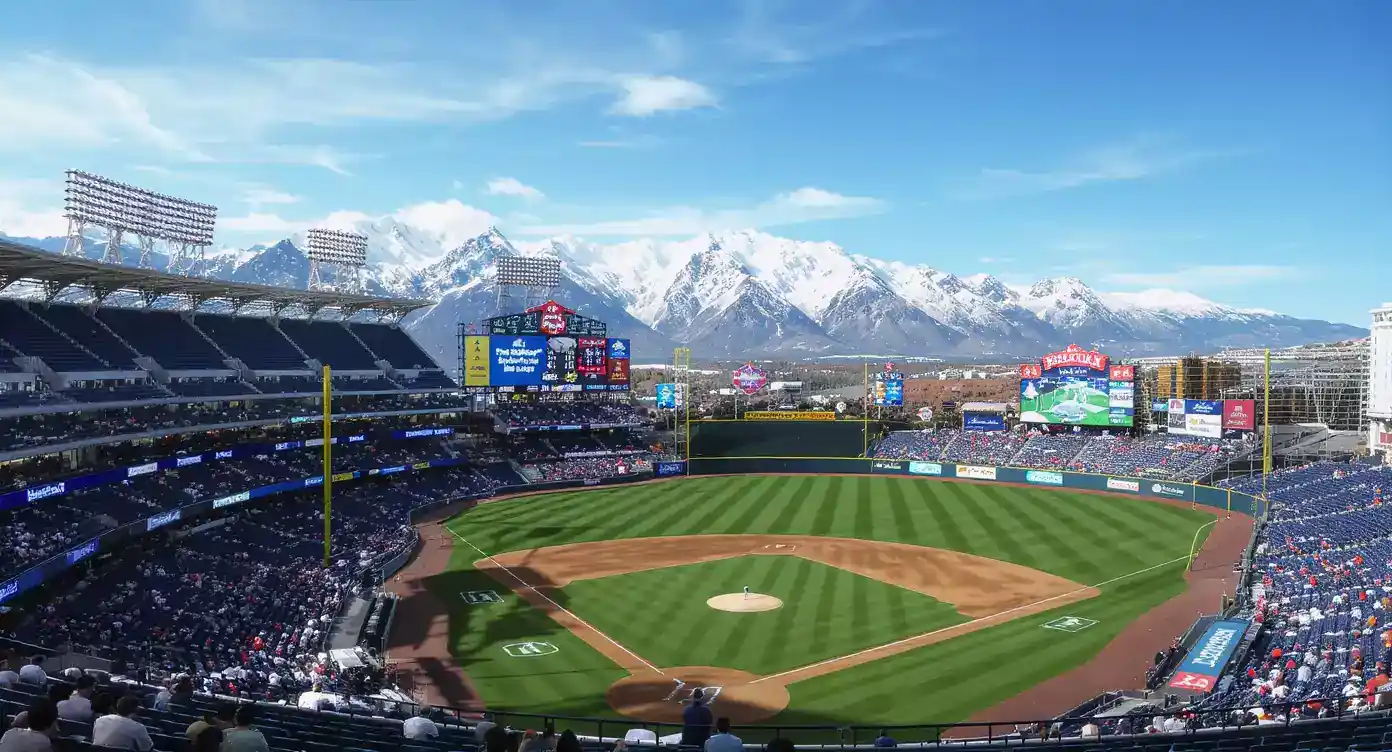
Denver sits at roughly 5,200 feet above sea level, the highest big-league venue by a wide margin. Air density at that altitude is about 18 percent lower than at sea level, which has two compounding effects on a batted ball. First, the ball travels further through thinner air for the same exit velocity. Second, breaking pitches break less, because the spin of the ball acts on less air, and pitchers lose a measurable fraction of the movement they rely on to generate weak contact.
The Statcast Park Factors documentation captures the underlying physics neatly: every 10 degrees Fahrenheit of temperature adds roughly 1 percent to flight distance, and every 800 feet of altitude adds another 1 percent. Coors at 5,200 feet is roughly 6.5 percent of extra carry distance just from altitude, before you add summer heat or wind. That converts a warning-track fly ball at sea level into a home run in Denver, and the cumulative effect across nine innings is the inflated scoring environment everyone associates with the park.
The second factor – reduced pitch movement – is harder to quantify but at least as important. A breaking ball that breaks 6 inches at sea level might break 4.5 inches in Denver. That difference is the gap between a swinging strike and a barrelled line drive. Coors isn’t just a place where balls fly further. It’s a place where pitchers’ best pitches don’t work as designed, which means even quality starters post worse numbers there than they do anywhere else.
Run scoring at Coors has historically run 20 to 30 percent above league average over rolling multi-year samples. That’s the structural input every totals line at Coors starts from. The bookmaker doesn’t pretend Coors is a neutral park. They set lines that already include the altitude effect. The question is whether they’ve set the line correctly for the specific game in front of you, which is where the work begins.
How Vegas Adjusts the Line
Coors totals typically open between 10.5 and 12.5 runs. The neutral-park equivalent for the same matchup would open between 8.0 and 9.5. So the bookmaker is already adding 2 to 3 full runs to account for Denver’s environment. That adjustment is the heart of why you can’t just blanket-bet overs at Coors – the line has already eaten the easy edge.
The mechanism: oddsmakers project runs for each starting pitcher and lineup against a neutral baseline, then apply a park-factor multiplier. For Coors, the multiplier sits around 1.20 to 1.25 on the run side and higher than that for home runs alone. Sutter Health Park in Sacramento, the Athletics’ interim venue in 2025, posted a +10 percent runs and +5 percent home runs factor relative to league average, and that’s considered a hitter’s park – Coors operates at roughly double those multipliers across the run-scoring metric.
What this means for the bettor: the line is already shaded for what you can see. To beat the over, you need conditions the oddsmaker has under-weighted. To beat the under, you need conditions the oddsmaker has over-weighted. The line is doing its job; your job is finding the edges around its central estimate.
The over-bettor’s typical mistake is assuming the line moves linearly with conditions. It doesn’t. Lines compress as totals get higher because the marginal probability of any specific outcome (12 runs vs 13 runs vs 14 runs) flattens out. A line of 12.5 is only modestly more “over-able” than a line of 11.0, even though the run environment is significantly hotter. The bookmaker accounts for that. The bettor often doesn’t.
When the Under Still Wins
The under is a viable bet at Coors more often than the casual fan would guess. Three conditions in particular shift the calculus toward the under.
First, cold weather. Early-April Rockies home games can be played in the 40s Fahrenheit. Every 10 degrees of temperature drop subtracts about 1 percent of carry distance. A 50-degree night game at Coors loses 3 to 4 percent of distance relative to a 75-degree day game. That’s the difference between a warning-track flyball turning into a home run versus an out. April and September unders at Coors have historically returned positive ROI for that reason alone.
Second, wind blowing in. Coors has an unusual prevailing wind pattern that can blow inward from centre field on certain afternoons. When that pattern lines up with the broadcast forecast – 8 to 10 mph wind in from centre – the run-suppression effect is significant. Wind into the outfield can reduce home-run output by roughly a third in extreme cases, though the typical Coors wind effect is more modest.
Third, two strong starting pitchers. Coors discounts starting pitcher value, but it doesn’t eliminate it. When both starters have FIP under 3.50 and command the strike zone – meaning they can locate the breaking ball even with less movement – totals run lower than the line suggests. The temptation is to think Coors neutralises all pitching. It doesn’t. It compresses the gap between elite and average, but elite is still elite, and two elite starters can still hold a Coors game to single digits.
The combination of all three – cold spring night, wind in, two quality starters – is rare. When it happens, the under at Coors trades at a price that hasn’t fully accounted for the conditions, because the bookmaker’s central tendency is still “Coors equals offence.” That’s the spot where the under genuinely lives.
The Humidor Effect
In 2002, the Rockies introduced a humidor to store game baseballs in a controlled humidity environment. The effect was deliberate suppression – humidified baseballs travel less far and have firmer surfaces, which combine to reduce home runs and overall scoring. The park-factor data confirms it worked. Pre-humidor Coors was an even more extreme run environment than post-humidor Coors; the line adjustments today are based on the moderated, humidor-era park.
By 2026, the humidor is old news. Every other ballpark has installed one too, so the relative effect at Coors is what matters. Coors with a humidor is still 20 to 25 percent above league average for runs – the altitude effect overwhelms whatever the humidor takes back. But the relative gap between Coors and the average park has narrowed since other parks adopted the same equipment.
The practical takeaway: don’t bet Coors based on pre-humidor mythology. Bet based on current park factors, which are still extreme but less extreme than the “thin air, balls fly forever” narrative suggests. The line has fully absorbed the humidor era. Edge requires reading the conditions of the specific game, not relying on the park’s historical reputation.
UK Application: The Time-Zone Problem
Rockies home games start around 02:10 to 03:10 GMT during British Summer Time, and 01:10 to 02:10 GMT in the autumn. That’s a brutal schedule for UK bettors. Two practical consequences follow.
The first is that placing a Coors over or under at midnight UK time, hours before first pitch, means you’re betting into a line that hasn’t yet seen the late-stage market action – late lineup news, the most updated weather forecast, sharp money inflows from US punters who haven’t yet placed their bets. You’re trading at a price that may not reflect the closing-line view of the game. Closing line value tracking is essential here precisely because Coors is one of the markets most sensitive to late information.
The second is bankroll discipline. There is a real risk of staying up to watch a 2 AM first pitch you’ve bet on, getting tired, watching the game turn against you in the fifth, and chasing with a live bet you wouldn’t have made awake at noon. The UK gambling market generated £16.8 billion GGY in the financial year April 2024 to March 2025, and a meaningful slice of that revenue comes from late-night impulse betting that sober punters wouldn’t replicate. Don’t be a contributor. Bet the over or under at 22:00 UK time, log the bet, and check the result in the morning. The whole edge of running a Coors strategy from the UK depends on never being awake to ruin it.
For UK bettors building a broader run-environment portfolio, Coors is one extreme – the other end of the park-factor spectrum, the pitcher-friendly venues, deserves its own treatment, and the framework for betting overs and unders profitably across the full range of MLB venues is where the Coors-specific work fits into a bigger system.
The Real Coors Edge
The Coors edge isn’t “bet the over.” That edge has been priced out for two decades. The real edge is conditional, narrow, and seasonal – overs in mid-summer day games with neutral wind and weak starters, unders in cold-night games with wind in and elite starters, and nothing in the middle slate where the line has already eaten the angle. Most Coors games qualify as “nothing in the middle.” On the days that don’t, you bet. The discipline to skip 70 percent of Rockies home games is what separates a Coors strategy from a Coors habit.
Does the Coors humidor still neutralise altitude in 2026?
It mitigates but doesn’t neutralise. Coors with a humidor still posts run factors 20 to 25 percent above league average. The humidor reduces the most extreme pre-2002 inflation, and other parks now use humidors too, so the relative Coors effect is smaller than it once was – but altitude physics still dominate the equation.
Is the Coors total a betting trap by now?
It’s a trap for people who blanket-bet overs without checking conditions. The line is set high enough that the easy edge has been priced out, and undisciplined overs lose money across a season. The trap is the reputation, not the park itself – selective betting on conditional setups still works, but defaulting to overs at Coors is a losing strategy in 2026.
How does daytime vs night-time temperature shift Coors totals?
Day games at Coors in July and August trend hotter, sometimes 90 Fahrenheit or above, which adds 1.5 to 2 percent of carry distance versus a 70-degree night. Cool April and September night games can lose 3 to 4 percent of distance versus mid-summer days. The differential is significant enough to consistently shift over-under value across the season.
Prepared by the mlb Betting Systems editorial staff.